ALL1512-C First 6 Weeks Thursday 3:00-4:20 Start Date 17-Sep
Grossman 115 Limit 25
Does justice demand that we redistribute income or other resources from some citizens to others who are less well-off? This course will look at economics from the standpoint of fairness. Arguments over taxes, welfare, medical insurance, immigration, policing and many other issues center on fairness as a goal. How do we make sense of these problems? We all have notions of what fairness requires, but it is hard to say exactly what this means. In this course, we will compare five basic principles thought to justify redistribution: liberty, equality, sufficiency, utility, and something called (maxi)minimality, which means helping the least well-off as much as possible. Is one of these values fundamental to questions of economic fairness, or should we attempt to blend or balance them in some way? How should such issues be decided in a free society?
This six-week course will be run as an informal seminar, with at least as much discussion as lecture. Readings will be forwarded by the coordinators.
Coordinator: Theodore Everett 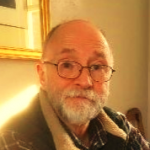
Ted is Professor Emeritus at SUNY Geneseo, where he taught philosophy for 25 years before retiring with his wife to Brewster. This will be his fourth course at ALL
Coordinator: Bruce Everett 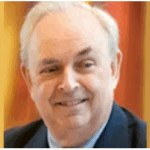
Bruce is a retired ExxonMobil executive with multiple degrees in international economics. He taught energy economics at the Fletcher School of Law and Diplomacy at Tufts University and the Georgetown School of Foreign Service. Working in business, government, and academia, it seems clear to Bruce that many if not most of our public policy disputes concern issues of fairness.
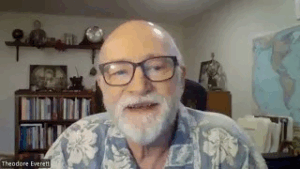
Here Ted discusses his previous course “Understanding Disagreement.”